







The Illuminating Truth: How Proper Desk Lighting Boosts Productivity and Protects Your Eyes
Share
Introduction When building a home office, most people obsess over their chair and monitor, completely ignoring one of the most critical elements of productivity: lighting. Poor lighting doesn't just make your workspace look gloomy; it causes eye strain, headaches, and a significant drop in afternoon energy levels. Understanding the science of workspace illumination can completely transform your Work-From-Home (WFH) experience.
1. The 3-Tier Lighting Strategy A well-lit desk shouldn't rely on a single harsh ceiling light. Interior designers use a "3-Tier" approach:
-
Ambient Lighting: The general light in the room (sunlight or ceiling lights). Keep this soft to avoid screen glare.
-
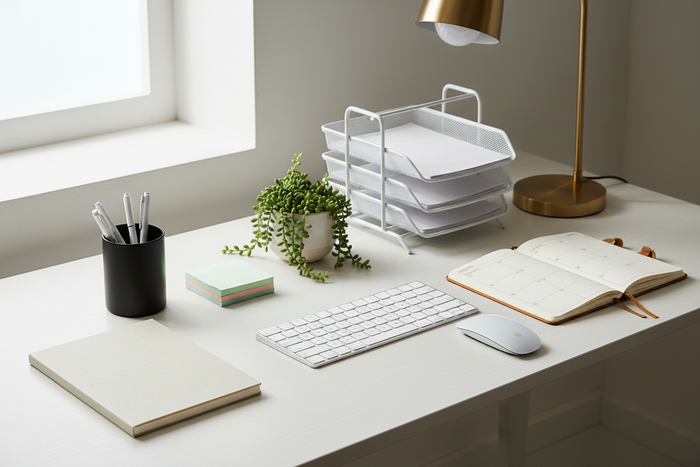
Task Lighting: Focused light for reading or writing. A high-quality LED desk lamp with adjustable brightness is essential here.
-
Accent Lighting: Soft background lighting, such as an LED strip behind your monitor, which reduces the harsh contrast between a bright screen and a dark room.
2. Understanding Color Temperature (Kelvins) Not all light is created equal. Light is measured in Kelvins (K). For deep work and focus, you want cooler, blue-toned light (around 4000K to 5000K) which mimics daylight and keeps your brain alert. In the evening, switch to warmer, yellow tones (2700K to 3000K) to help your body prepare for sleep and reduce eye fatigue.
3. The Magic of Screen Monitor Bars If you have limited desk space, a traditional lamp might be too bulky. A screen monitor light bar mounts directly on top of your monitor. It directs light straight down onto your keyboard and desk pad without casting any glare on the screen itself—a must-have for late-night workers.